You have a morning routine for productivity. Why don't you have a night routine for recovery?
Most people treat sleep like it just happens. They doom-scroll until their eyes burn, then wonder why they can't fall asleep. Here's the truth: a bedtime routine isn't just self-care or a wellness trend. It's Pavlovian conditioning.
You are training your brain that Action A = Sleep. When you repeat the same steps at the same time each night, your nervous system learns to recognize the pattern. Research from Stanford University shows that consistent sleep routines help regulate the brain regions responsible for anxiety and motivation. Your body starts preparing for rest before you even lie down.
The problem is most people don't know what to actually do during that last hour before bed. They know screens are bad. They know caffeine interferes with sleep. But what replaces these habits?
This guide gives you a strict timeline to follow. We combine the famous 10-3-2-1 rule with a 60-minute sensory regulation plan. The goal is simple: reset your nervous system so sleep feels automatic, not forced.
The Foundation: The "10-3-2-1" Rule
This framework is based on how your body processes stimulants and stress hormones. Each number represents hours before your target bedtime.
10 hours before bed: No caffeine
Caffeine blocks adenosine, a compound your body uses to signal sleepiness. The National Institutes of Health explains that adenosine builds up during wakefulness and creates biological sleep pressure. When you drink coffee, you temporarily mask this signal.
A study in the Journal of Clinical Sleep Medicine found that caffeine consumed even 6 hours before bedtime reduced total sleep time. The 10-hour rule gives your body enough time to fully clear caffeine and allow natural adenosine buildup. If you plan to sleep at 11 PM, your last coffee should be at 1 PM.
3 hours before bed: No food
Digestion requires energy and raises core body temperature. Your body needs to cool down to trigger sleep. Eating a large meal too close to bedtime keeps your metabolism active when it should be winding down. Light snacks are fine, but avoid heavy proteins or large portions after 8 PM if you sleep at 11 PM.
2 hours before bed: No work
Work emails, spreadsheets, and problem-solving all spike cortisol. This is your stress hormone, and it directly opposes melatonin production. At 9 PM, close your laptop. Set an autoresponder if needed. Your brain needs time to shift from "threat detection mode" to "rest mode."
1 hour before bed: No screens
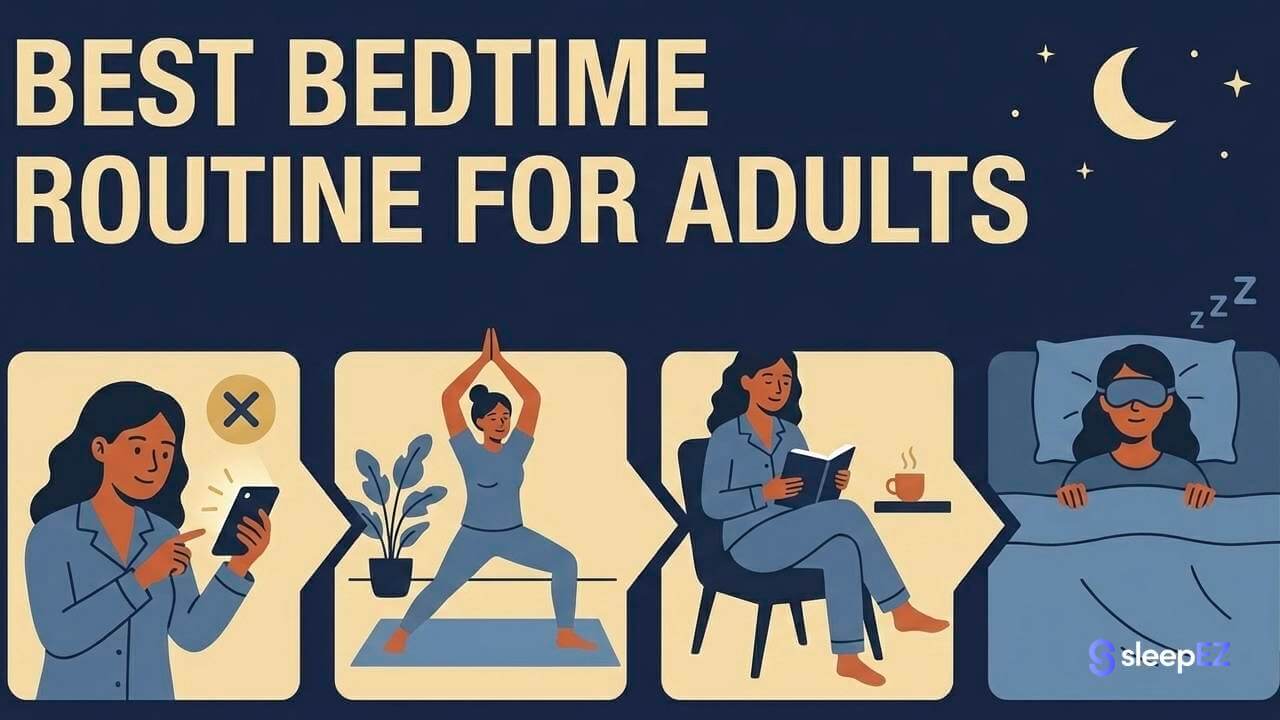
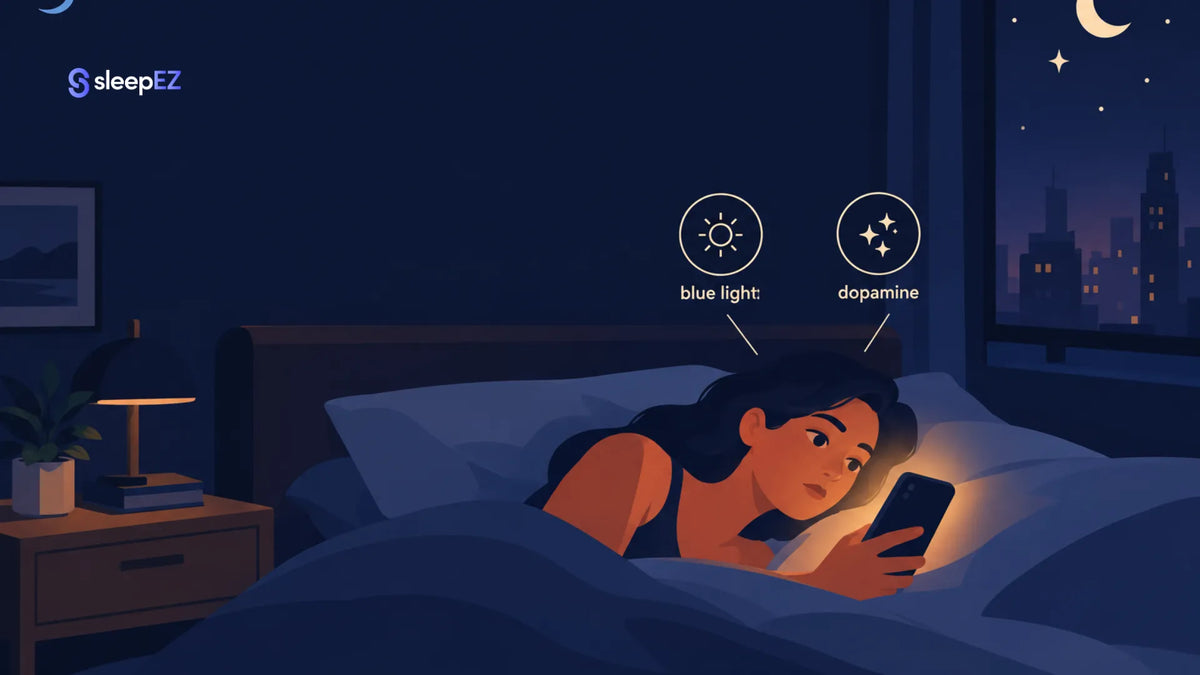
Blue light from phones and computers suppresses melatonin, the hormone that makes you drowsy. But it's not just the light. Social media, news feeds, and text conversations keep your brain in a state of alertness. At 10 PM, put your phone in another room. This is when your 60-minute sensory plan begins.
The 60-Minute Sensory Plan (What to Do in the Last Hour)
Most advice stops at "no screens." That's not helpful when you're left sitting in silence with racing thoughts. This plan tells you exactly what to do, minute by minute.
The strategy is sensory downregulation. You systematically remove stimulation from your environment and body. Each step builds on the last.
60 Minutes Before: Digital Sunset (Light Control)
Dim every light in your home. Turn off overhead lights and use lamps instead. If you have smart bulbs, set them to warm orange or red tones.
Put on a sleep mask, even if you're not in bed yet. Wearing the mask on your forehead or during meditation forces your brain to adjust to darkness early. You're pre-loading the association between the mask and sleep. This simple habit trains your body to recognize darkness as a sleep signal.
What to do during this phase:
- Light stretching or yoga
- Reading a physical book under a dim lamp
- Organizing tomorrow's clothes or items
Avoid anything that requires bright light or decision-making.
30 Minutes Before: Soundscaping (Anxiety Control)
Silence is not always calming. For anxious people, quiet rooms amplify racing thoughts. You need to replace mental noise with controlled external noise.
Turn on a sound machine or use a white noise app. Pink noise and brown noise work exceptionally well for blocking intrusive thoughts. They mask background sounds while creating a consistent audio environment that soothes the nervous system.
Stanford research confirms that environmental consistency reduces uncertainty and helps calm the limbic system. Your brain stops scanning for threats when the soundscape is predictable.
What to do during this phase:
- Take a warm shower or bath
- Journal three things from today (no problem-solving, just observations)
- Drink herbal tea or warm water
The shower is especially important. Your body temperature drops after you get out, which signals melatonin release.
15 Minutes Before: Physiological Shift (Temperature and Breath)
This is when you make the physical switch from "awake breathing" to "sleep breathing."
Brush your teeth, then apply mouth tape if you use it. Mouth tape gently encourages nasal breathing, which activates the parasympathetic nervous system. This is your "rest and digest" mode, and nasal breathing naturally slows your heart rate.
Important safety note: Only use mouth tape if you can breathe easily through your nose and have consulted a doctor.
What to do during this phase:
- Nasal breathing exercises (4 counts in, 6 counts out)
- Apply any skincare or nighttime products
- Set your phone alarm for tomorrow, then leave it outside the bedroom
0 Minutes Before: Sensory Lock (Total Deprivation)
You're now in bed. This is the final seal.
Put in earplugs. Pull your sleep mask down over your eyes. Your room should feel like a cave: dark, quiet, cool.
This is called a "sleep cocoon." Quality earplugs block disruptive sounds while still allowing you to hear important alerts like alarms. Combined with a properly fitted sleep mask, you've created the optimal environment for deep sleep. Your brain has nothing left to process except the signal to sleep.
If your mind still races, don't fight it. Let thoughts come and go without engaging. Your body will follow the routine you've trained it to recognize.
Customizable Routines for Your Lifestyle
Not everyone has the same sleep barriers. Choose the variation that matches your main challenge.
The "Anxious Overthinker"
Your problem: Racing thoughts, rehashing conversations, worrying about tomorrow.
Your focus: Sound machine + journaling.
Start the sound machine at 30 minutes before bed, not later. Use the journaling time to brain-dump every worry onto paper. Don't try to solve anything. Just get it out of your head and onto a page.
Add a body scan meditation at the 15-minute mark. Lie down and mentally relax each body part from toes to head.
The "Shift Worker"
Your problem: Sleeping during the day or at inconsistent times.
Your focus: Blackout mask + melatonin (if approved by your doctor).
Your circadian rhythm is fighting daylight. A basic sleep mask won't cut it. You need a contoured blackout mask that blocks 100% of light without putting pressure on your eyes. Look for masks with a 3D design that creates space around your eyelids. Pair this with blackout curtains for complete darkness.
Take melatonin 1 hour before your target sleep time. Keep the 10-3-2-1 rule the same, just shifted to your schedule.
The "Light Sleeper"
Your problem: Waking up to every noise, partner's movement, or temperature change.
Your focus: Earplugs + mouth tape (if medically appropriate).
Use foam earplugs rated for 32+ decibel reduction. High-quality earplugs are game-changing for light sleepers because they eliminate sudden noise spikes that trigger micro-awakenings. Combine with a white noise machine set to low volume. The goal is not total silence but consistent, unchanging sound.
Add a cooling mattress pad or keep your room at 65-68°F. Light sleepers often wake when their body temperature rises.
Featured Snippet: The Routine Checklist
| Time | Phase | Activity | Tool |
|---|---|---|---|
| -60 Mins | Digital Sunset | Phone away, dim lights. | Sleep Mask |
| -30 Mins | Soundscaping | Turn on white noise. | Sound Machine |
| -15 Mins | Body Prep | Warm shower, brush teeth. | Mouth Tape* |
| 0 Mins | Sensory Lock | Mask on, earplugs in. | Mask & Plugs |
*Consult a doctor before using mouth tape, especially if you have nasal congestion or breathing issues.
Start Small, Build From There
Don't try to change your whole life tonight. Start with one step.
If you're a chronic phone user, begin with the Digital Sunset phase. Move your phone charger to another room and replace scrolling with reading.
If anxiety keeps you awake, start with the Soundscaping phase. Get a quality sound machine with pink or brown noise options. Let your brain learn that this sound = safety = sleep. A dedicated sound machine is superior to phone apps because there's no blue light exposure or notification temptation.
If you wake up constantly, start with the Sensory Lock phase. Invest in professional-grade earplugs and a contoured sleep mask designed for side sleepers. These tools physically block out the world, giving your nervous system permission to fully relax. The difference between cheap and quality sleep tools is often the difference between restless and restorative sleep.
Your body uses biological signals from the environment to know when to sleep. When you control light, sound, and temperature, you take control of those signals. You're not fighting your biology. You're working with it.
The 60-minute sensory plan isn't about perfection. It's about consistency. Do it at the same time each night. Your nervous system will catch on. And within two weeks, sleep will stop feeling like a battle.
It will feel automatic.

Leave a comment
This site is protected by hCaptcha and the hCaptcha Privacy Policy and Terms of Service apply.