
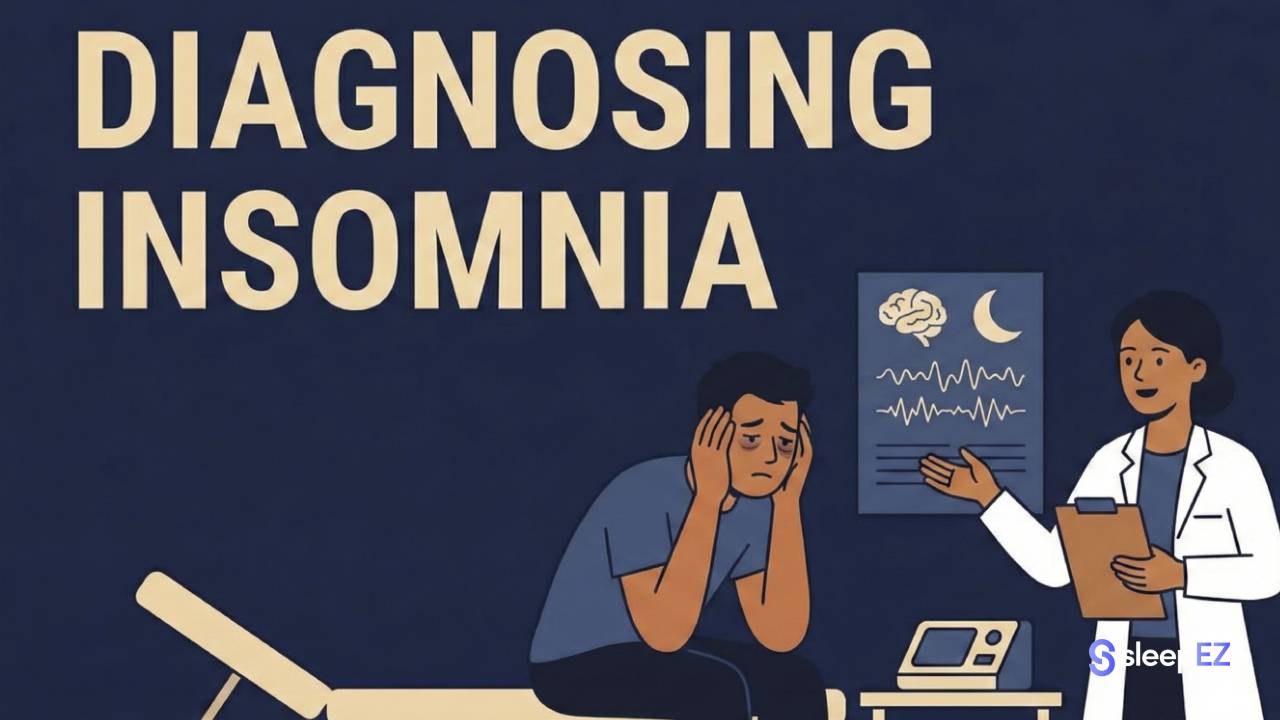
There is no blood test for insomnia. No scan can show it. No single lab result confirms it.
Doctors diagnose insomnia through a process of elimination. They look at your sleep patterns, your bedroom, and your habits. Then they rule out other causes one by one.
The good news? The more data you bring to your appointment, the faster you get answers. This guide shows you exactly what doctors look for and how to prepare.
What Are the Medical Criteria for Insomnia?
Doctors use specific criteria from the DSM-5 to diagnose insomnia. According to research published by the National Institutes of Health, the diagnosis requires three main elements:
The "3-and-3" Rule:
- You have trouble falling asleep, staying asleep, or waking too early
- This happens at least 3 nights per week
- It continues for at least 3 months
The "Opportunity" Clause:
- You cannot sleep even when you have the time and a safe place to rest
- The problem exists despite having adequate sleep conditions
Daily Impact:
- Your poor sleep causes problems during the day
- You feel tired, irritable, or cannot focus at work
You need all three elements for a clinical diagnosis. Having just one or two means you might have poor sleep habits instead of medical insomnia.
How Do Doctors Rule Out "Bad Sleep Habits"?
Before labeling your problem as a medical condition, doctors must check your environment. Your bedroom might be the real issue.
This step is called "ruling out environmental factors." Studies from Harvard Medical School show that light exposure and noise pollution disrupt sleep and create insomnia symptoms.
Your doctor will likely ask: "Is your room dark and quiet enough?" Most people answer yes without really testing it.
Try a 2-Week Exclusion Test:
Use blackout sleep masks and noise-reducing earplugs for 14 consecutive nights. Block out all light and sound. Track whether your sleep improves.
If you still cannot sleep despite removing these factors, you have strong evidence. You can tell your doctor with certainty that your environment is not the cause. This points directly to a clinical diagnosis rather than poor sleep hygiene.
Many people discover their bedroom was noisier or brighter than they realized. Even small improvements here can change everything.
Is There a Test for Insomnia? (Using a Sleep Diary)
The sleep diary is the gold standard for insomnia diagnosis. Doctors trust it more than any other tool.
Research teams including 25 sleep experts developed the Consensus Sleep Diary through NIH-funded studies. It remains the clinical standard for tracking sleep patterns.
What to Track Each Day:
- Bedtime: What time you got into bed
- Sleep time: What time you actually fell asleep (your best guess)
- Wake time: What time you woke up for good
- Night wakings: How many times you woke during the night
- Caffeine: All coffee, tea, energy drinks, and chocolate after 2 PM
- Alcohol: Any drinks in the evening
- Medications: Sleep aids or other drugs that affect rest
- Daytime naps: Duration and timing
Track for at least 2 weeks before your appointment. The National Heart, Lung, and Blood Institute recommends one to two weeks of diary keeping before seeing your doctor.
You can use a simple notebook or your phone's notes app. Write entries in the morning while details are fresh. Patterns emerge quickly when you see the data on paper.
Physical Exams: What Is the Doctor Looking For?
Your doctor will check your body for physical problems that fragment sleep. They look at your throat, neck, and breathing passages.
Common Checks Include:
- Neck circumference (larger necks often mean airway problems)
- Throat tissue and tonsil size
- Jaw position and bite alignment
- Nasal passage blockages
They want to know if something physical is waking you up. A blocked airway causes frequent micro-wakings that you might not remember.
The Open-Mouth Breathing Test:
Doctors specifically check whether you breathe through your mouth at night. Open-mouth breathing fragments sleep and causes dry mouth in the morning.
If you wake with a dry mouth or sore throat, mention it. Some people try mouth tape to keep their mouth closed during sleep. If you tested this and found it helped you stay asleep, share that detail with your doctor.
This information helps differentiate pure insomnia from airway issues like mild apnea. The treatments are completely different.
Do I Need a Sleep Study for Insomnia?
Usually no. Sleep studies are expensive and time-consuming. Doctors reserve them for specific conditions.
When Sleep Studies ARE Needed:
- Suspected sleep apnea (snoring, gasping, or choking at night)
- Periodic limb movement disorder (kicking or twitching during sleep)
- Narcolepsy (falling asleep suddenly during the day)
When Sleep Studies Are NOT Needed:
- Classic insomnia with no other symptoms
- Anxiety-related sleep problems
- Stress-induced insomnia
One exception exists. Sometimes total silence makes insomnia worse. If you notice ringing in your ears (tinnitus) or racing thoughts in quiet rooms, tell your doctor.
Many people find that white noise sound machines help them relax and fall asleep faster. If this works for you, it suggests anxiety-driven insomnia rather than a physical sleep disorder. That detail changes how doctors approach treatment.
How to Prepare for Your Appointment
Your doctor needs three things to make an accurate diagnosis:
Two Weeks Before:
- Start your sleep diary today
- Track every night without skipping
- Note all caffeine and alcohol intake
During the Two Weeks:
- Test your environment with blackout masks and earplugs
- Notice if darkness and silence actually help
- Record any changes in your sleep diary
Day of Appointment:
- Bring your completed sleep diary
- List all medications and supplements
- Write down specific questions about treatment options
What to Tell Your Doctor:
- Your main complaint (cannot fall asleep vs. cannot stay asleep)
- How long this has been happening
- What you have already tried
- How it affects your work and relationships
Diagnosis is the first step to recovery. The data you gather proves your insomnia is real. It gives your doctor the tools to help you.
Start tracking your sleep tonight. Your first good night is closer than you think.
This article is for information only. It doesn't replace medical advice. Always talk to a doctor about sleep problems before starting treatment.


Leave a comment
This site is protected by hCaptcha and the hCaptcha Privacy Policy and Terms of Service apply.