
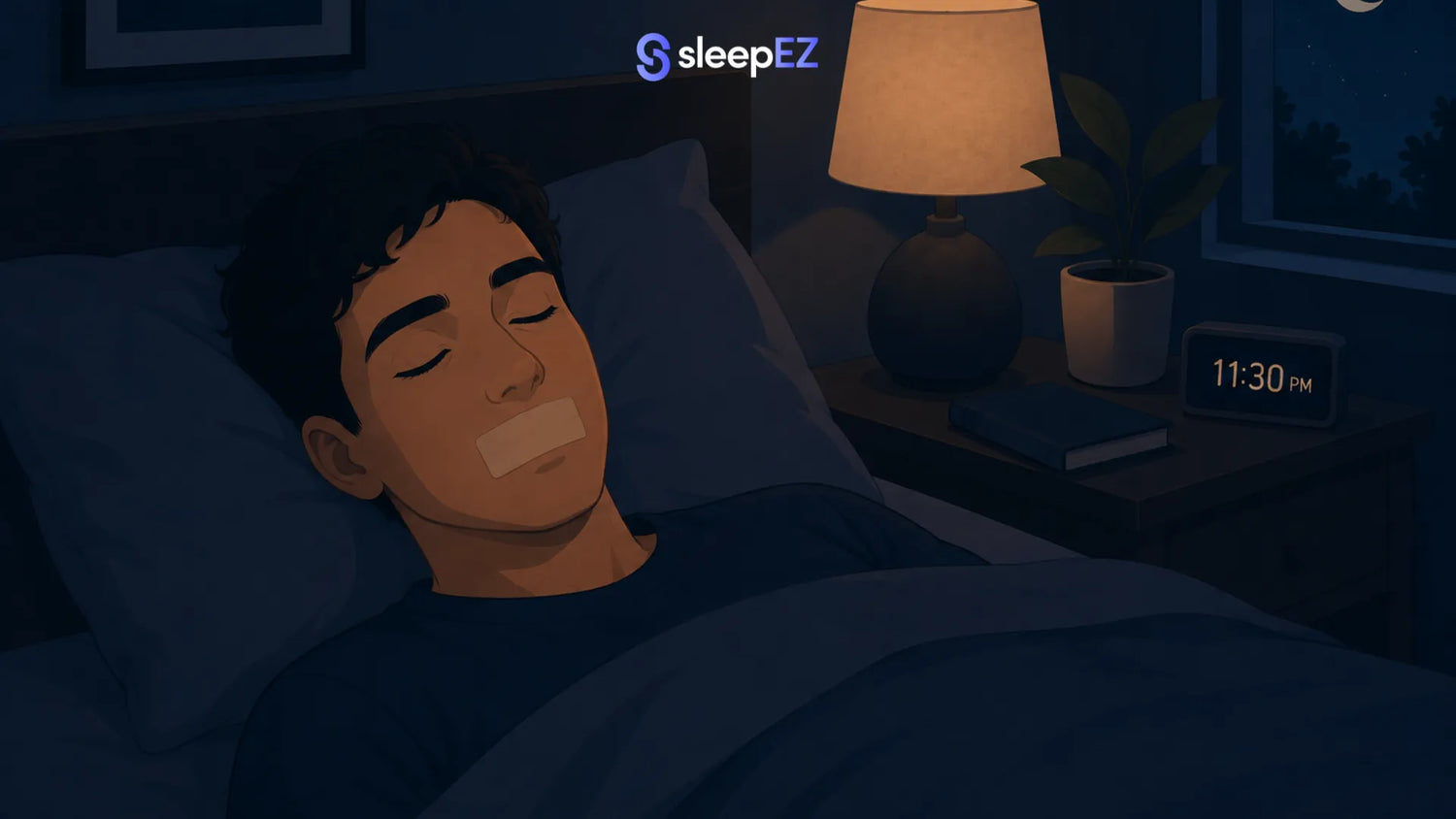
Waking up with a dry mouth, a sore throat, or listening to a partner's complaints about your snoring is a frustrating start to the day.
These are often signs of mouth breathing, a habit that can disrupt sleep quality and leave you feeling tired. If you're looking for a simple solution, you may have come across an intriguing tool: mouth tape.
This guide provides a complete overview of using mouth tape for sleep. We'll explore exactly what it's used for, its benefits and risks, and how you can get started safely.
Quick Answer: Does Mouth Tape Work?
Mouth taping may help reduce snoring and dry mouth for some people who breathe through their mouth during sleep. However, a 2025 systematic review (Rhee et al., PLOS One) found the overall evidence weak, only 2 of 10 reviewed studies suggested benefit, and warned that mouth taping poses a serious asphyxiation risk for anyone with nasal obstruction or sleep apnea.
The short answer: It may help a specific group of people (healthy adults who mouth breathe with clear nasal passages), but it is not appropriate for everyone and should not be used without confirming you can breathe comfortably through your nose.
Who Should NEVER Use Mouth Tape
This section comes first because it's the most important.
Do not use mouth tape if you:
- Cannot breathe comfortably through your nose, nasal congestion, a deviated septum, nasal polyps, or any structural restriction makes mouth tape unsafe
- Have diagnosed or suspected sleep apnea, mouth tape is not a treatment for sleep apnea and may be dangerous; consult your doctor
- Have significant nasal allergies, if your nose is frequently blocked, address the congestion before considering mouth tape
- Have any respiratory condition, asthma, COPD, or other breathing conditions require medical guidance first
- Experience nausea or vomiting, mouth tape is not safe if there is any risk of vomiting during sleep
- Are a child, only under the guidance of a healthcare professional
The simple test: If you cannot breathe comfortably through your nose right now, with your mouth closed, do not use mouth tape.
If nasal congestion is the barrier, nasal strips may help open your nasal passages, and may be a more appropriate solution than mouth tape.
What is Mouth Tape Used For?
At its core, mouth tape is used to keep the mouth closed during sleep. This simple action encourages the body's natural and more efficient way of breathing: through the nose.
The primary goals of using mouth tape are to:
- Reduce or Eliminate Snoring: By preventing the vibrations in the throat caused by mouth breathing.
- Alleviate Dry Mouth and Bad Breath: By allowing saliva to keep the mouth clean and hydrated overnight.
- Improve Overall Sleep Quality: By promoting a more stable and deeper breathing pattern.
How Does Mouth Tape Work?
Mouth tape is a gentle, skin-safe adhesive strip applied over the lips at night. By keeping the lips together, it helps retrain your body to rely on nasal breathing, which offers several distinct advantages over mouth breathing for sleep quality and overall health.
Is Mouth Taping Safe?
Yes, mouth taping is safe when you use tape specifically designed for this purpose. Your body will naturally wake you if you need to breathe through your mouth.
People have been safely using mouth tape for years to improve their sleep quality.
You should NOT use mouth tape if you:
- Suffer from nasal congestion due to a cold, allergies, or a deviated septum.
- Have difficulty breathing through your nose for any reason.
- Have consumed alcohol or sedatives close to bedtime.
- Are feeling nauseous.
- Are a child.
The primary risk is obstructing your airway if you cannot breathe properly through your nose. Always prioritize your ability to breathe easily.
If you have any concerns about whether mouth taping is right for you, consult your doctor first.
What Kind of Tape Should I Use?
Never use regular adhesive tape, duct tape, or masking tape on your skin. These can cause irritation, leave residue, or stick too aggressively.
You need tape specifically designed for use on skin during sleep, with skin-safe adhesive.
What Does the Evidence Actually Say?
This is a YMYL (health) topic, and you deserve an honest answer about the research — not just the benefits.
Studies Showing Potential Benefit
A small number of studies have found that mouth taping may reduce snoring index scores in people who mouth breathe during sleep. One study found benefit for CPAP users experiencing mouth leak — where mouth tape helped keep the mouth closed and improved CPAP effectiveness. These are real, if limited, findings.
The 2025 Systematic Review
In May 2025, Rhee et al. published a systematic review in PLOS One (DOI: 10.1371/journal.pone.0323643) that reviewed 10 studies on mouth taping. Their findings:
- Only 2 of the 10 studies suggested benefit
- 4 studies warned of asphyxiation risk in people with nasal obstruction
- The overall evidence was rated as weak and methodologically inconsistent
- The review concluded there is insufficient evidence to recommend mouth taping broadly
This review received significant coverage from Houston Methodist, EurekAlert, and HealthDay, and substantially shifted how the medical community frames this topic.
What Researchers Agree On
- Mouth tape may help some people who mouth breathe with fully clear nasal passages
- It is contraindicated for anyone with nasal obstruction, sleep apnea, or respiratory conditions
- The evidence base is currently too small and inconsistent to support broad recommendations
- It is not a treatment for any medical condition
The honest position: Mouth tape is a low-cost sleep support tool that may help a specific subset of people. It is not a medically proven treatment, and it carries real risks for people who are not appropriate candidates.
Mouth Taping and Sleep Apnea
This is critical: Mouth tape is not a treatment or cure for sleep apnea. Obstructive Sleep Apnea (OSA) is a serious medical condition where breathing repeatedly stops and starts during sleep.
It requires a medical diagnosis and a prescribed treatment plan, often involving a CPAP machine.
Using mouth tape without a doctor's guidance when you have undiagnosed sleep apnea can be dangerous, as it may worsen the airway obstruction.
However, for some diagnosed CPAP users who struggle with mouth leaks (where air from the machine escapes through the mouth), a doctor may recommend mouth tape in conjunction with their CPAP therapy to improve its effectiveness.
Always consult your doctor or a sleep specialist before trying mouth tape if you have or suspect you have sleep apnea.
How Mouth Tape Works
Mouth taping is simple. You place a piece of specially designed tape over your lips before bed. The tape gently keeps your mouth closed during sleep, encouraging your body to breathe through your nose.
This isn't about forcing anything. Your nose is already capable of handling all your breathing needs during sleep. The tape just prevents your mouth from falling open out of habit.
Many people who benefit from mouth tape don't realize they've been breathing through their mouth at night.
What Mouth Tape May Help With
For people who are appropriate candidates, healthy adults who mouth breathe with clear nasal passages, mouth tape may offer the following benefits.
Mouth Breathing and Dry Mouth
When you breathe through your mouth overnight, air continuously evaporates saliva. Keeping the mouth closed with tape prevents this, which may reduce morning dry mouth.
This is the most consistently reported benefit and the most biologically plausible.
Snoring (Mouth-Breathing Type Only)
Mouth breathing is one driver of snoring, air flowing over relaxed throat tissues causes vibration. For people whose snoring is specifically caused by mouth breathing (not nasal anatomy or sleep apnea), keeping the mouth closed may reduce snoring.
It will not help snoring caused by other mechanisms.
CPAP Mouth Leak
For CPAP users who experience air escaping through their mouth during therapy, mouth tape may help maintain the seal and improve CPAP effectiveness. This is one of the better-evidenced applications.
What mouth tape does not do: It does not treat sleep apnea, improve blood pressure, boost immune function, or increase nitric oxide in ways that have been clinically demonstrated. These claims are not supported by the current evidence base.
If Mouth Tape Isn't Right for You
If you have nasal congestion that prevents comfortable nasal breathing, mouth tape is not the right solution, and using it could be dangerous.
For nasal congestion: Breathe Nasal Strips mechanically open the nasal passages, making nasal breathing easier without requiring your mouth to stay closed. They're a safer starting point if congestion is your barrier.
For both congestion and mouth breathing: Many people use nasal strips and mouth tape together, nasal strips to open the passages, mouth tape to keep the mouth closed once comfortable nasal airflow is confirmed. See our full comparison: Nasal Strips vs Mouth Tape.
For snoring with suspected sleep apnea: Speak with your doctor. Sleep apnea is a medical condition that requires proper assessment, mouth tape is not appropriate and may be harmful.
Why Nasal Breathing Matters During Sleep
Your body is designed to breathe through your nose, especially during sleep. The differences between nasal and mouth breathing are significant:
| Aspect | Nasal Breathing ✅ | Mouth Breathing ❌ |
|---|---|---|
| Air Filtration | Filters dust, allergens, and bacteria before air reaches your lungs | Bypasses your nose's natural filtration system |
| Air Quality | Warms and humidifies air for easier breathing | Air enters cold and dry, irritating airways |
| Oxygen Absorption | Produces nitric oxide, which increases oxygen uptake by approximately 10% | Less efficient oxygen uptake |
| Moisture | Keeps your mouth and throat moist throughout the night | Dries out your mouth and throat |
| Snoring | Reduces snoring and improves sleep quality | Can trigger or worsen snoring |
| Sleep Quality | Promotes deeper, more restorative sleep | Often leads to poor sleep and morning fatigue |
| Morning Feeling | Wake up refreshed with no dry mouth | Wake up with dry mouth, sore throat, bad breath |
| Oral Health | Maintains saliva production, protecting teeth and gums | Increases risk of cavities and gum disease |
How to Choose the Best Mouth Tape
Not all tapes are created equal. Avoid using household tapes like duct tape or masking tape, which can damage your skin. Look for tape specifically designed for this purpose.
- Material: Choose a tape made from a hypoallergenic, breathable material like micropore paper tape.
- Adhesive: The adhesive should be gentle enough for sensitive skin but strong enough to hold through the night.
- Shape: Many products come as specially shaped strips that are easy to apply and may have a small unfiltered section over the lips for added peace of mind.
Many people try generic medical tape or cheap alternatives and quit after one uncomfortable night. The tape irritates their skin, feels awkward, or falls off halfway through.
What Makes a Good Mouth Tape?
For people who've confirmed they're appropriate candidates, the quality of the tape matters significantly.
What to look for:
- Hypoallergenic adhesive, skin-safe for nightly use without irritation
- Lip-shaped design, minimises contact with facial hair and conforms to the natural lip contour
- Gentle removal, should peel cleanly in the morning without pulling skin
- Breathable material, allows air movement if needed
- Appropriate adhesion, secure enough to stay in place, gentle enough to remove comfortably
Breathe Mouth Tape is designed with these criteria in mind, a hypoallergenic, lip-shaped tape with a gentle adhesive designed for nightly use. It's a comfort and convenience product for people who've decided (ideally after confirming clear nasal breathing) to try nasal-breathing support during sleep.
How to Try Mouth Taping Tonight
Ready to give it a try? Follow these steps for a safe and comfortable experience.
- Test it First: Before trying it overnight, wear the tape for 15-20 minutes during the day to ensure you feel comfortable breathing through your nose and don't have a skin reaction.
- Practice Nasal Breathing: Take a few moments to breathe deeply in and out through your nose.
- Wash and Dry Your Face: Remove any lotions, balms, or oils from around your mouth.
- Apply the Tape: You can apply it horizontally over the center of your lips or vertically. The goal is a gentle reminder, not a forceful seal.
- Remove it in the Morning: Remove the tape slowly and gently.
Start Sleeping Better Tonight
Mouth taping can be a simple, effective tool for improving sleep quality by encouraging nasal breathing. It offers compelling benefits for those who struggle with snoring, dry mouth, and the fatigue that comes from poor sleep.
However, safety comes first. It's not a one-size-fits-all solution and should be avoided by individuals with nasal obstructions or sleep apnea.
If you're curious, start slow, use the right materials, and listen to your body. For those with underlying health concerns, a conversation with your doctor is always the best first step.
Frequently Asked Questions
Does mouth tape work for snoring?
It may help if your snoring is caused by mouth breathing. A 2025 systematic review found the overall evidence weak, with only 2 of 10 studies showing benefit.
Mouth tape is not effective for snoring caused by sleep apnea or nasal anatomy.
Is mouth tape safe?
For healthy adults who can breathe comfortably through their nose, mouth tape is generally considered safe. It is not safe for people with nasal obstruction, sleep apnea, or respiratory conditions, the 2025 Rhee et al. review identified asphyxiation risk in these groups.
Who should not use mouth tape?
Anyone who cannot breathe comfortably through their nose with their mouth closed. This includes people with nasal congestion, deviated septum, nasal polyps, sleep apnea, asthma, or other respiratory conditions.
Can mouth tape help with dry mouth?
Yes, this is the most biologically plausible benefit. Keeping the mouth closed prevents air from evaporating saliva overnight, which may reduce morning dry mouth for people who mouth breathe.
Can I use mouth tape with a beard?
Yes, with beard-friendly tape. See our guide: Best Mouth Tape for Beards.
Can mouth tape replace nasal strips?
No, they solve different problems. Nasal strips open blocked nasal passages.
Mouth tape keeps the mouth closed. If nasal congestion is your issue, nasal strips address the root cause. See: Nasal Strips vs Mouth Tape.
How long does it take to see results from mouth tape?
Most people notice reduced dry mouth within the first few nights. Snoring effects, if any, typically become apparent within 1–2 weeks of consistent use.
Is there research supporting mouth taping?
The evidence is currently weak. A 2025 systematic review (Rhee et al., PLOS One) reviewed 10 studies and found only 2 showed benefit, while 4 warned of asphyxiation risk in people with nasal obstruction.
The evidence base is insufficient to support broad recommendations.
Can mouth tape stop snoring?
For many people, yes. If your snoring is caused by mouth breathing, mouth tape can significantly reduce or eliminate it by promoting nasal breathing.
Will I be able to breathe if my nose gets stuffy?
Most dedicated mouth tapes are designed to come off with a bit of pressure from opening your mouth. If your nose becomes congested, your body's natural response will be to open your mouth, which should dislodge the tape.
Do not use mouth tape if you are already congested.
Can mouth tape help with dry mouth?
Absolutely. This is one of the most immediate benefits users report. By preventing mouth breathing, it allows your mouth to retain its natural moisture.

Leave a comment
This site is protected by hCaptcha and the hCaptcha Privacy Policy and Terms of Service apply.