

The moment your head hits the pillow, your brain switches on. Tasks you forgot, conversations you should have had, problems you can't solve right now. All of it floods in at once. You check the clock: 2 AM. Then 3 AM. Then 4 AM.
This isn't just worrying. It's a physical response called hyperarousal. Your nervous system is stuck in survival mode, treating bedtime like a threat instead of rest.
Most advice tells you to "just relax" or "clear your mind." That doesn't work when your body is flooded with stress hormones. You need physical tools that work with your biology, not against it.
This guide shows you exactly how stress hijacks your sleep and gives you five sensory methods to reset your nervous system tonight.
How Stress Hijacks Sleep
Stress activates your fight-or-flight response. This survival mechanism releases cortisol and adrenaline to keep you alert and ready for danger. That made sense when humans faced predators. It doesn't make sense at midnight when you're worrying about a presentation.
Research from the National Institutes of Health shows that sleep loss causes your HPA axis (your stress control system) to become overactive. Your cortisol rhythm gets disrupted by up to 40%. When cortisol stays high at night, it suppresses melatonin, the hormone that signals sleep time.
Here's where the trap closes: Poor sleep increases stress hormones the next day. More stress means less sleep that night. Less sleep means more stress the following day. The cycle feeds itself.
Your body enters a state of chronic arousal. Even when you're physically tired, your nervous system won't power down. You become tired but wired.
Another NIH study found that even partial sleep loss delays HPA recovery. Evening cortisol levels jump by 37-45% after just one night of poor sleep. This creates a biological feedback loop where each sleepless night makes the next one harder.
Think of it like a smoke alarm that won't turn off. The threat is gone, but your system keeps screaming danger.
Signs of Stress-Induced Insomnia
Not everyone responds to stress the same way. Some people sleep through anything. Others lose sleep over minor worries. This difference is called sleep reactivity.
University of Colorado Boulder and Wayne State College of Medicine studied twins and found that sleep reactivity has a 29-43% genetic component. If your parents struggled with stress-induced insomnia, you're more likely to experience it too.
Common signs you have high sleep reactivity:
Racing thoughts at bedtime. Your mind loops through to-do lists, replays conversations, or jumps between worries. This is sometimes called "the to-do list loop." You can't turn off the mental chatter.
Physical tension that won't release. You notice your jaw is clenched, your shoulders are tight, or your hands are balled into fists. Your body holds stress even when you're trying to rest.
Sleep anxiety builds throughout the day. As bedtime approaches, you start dreading it. You worry about not falling asleep, which makes falling asleep harder. The bed becomes associated with frustration instead of comfort.
One stressful event ruins multiple nights. A single bad day at work or an argument can disrupt your sleep for three or four nights afterward. The initial stress passes, but your sleep doesn't return to normal.
People with high sleep reactivity are more likely to develop chronic insomnia. Penn State research found that children of highly reactive parents had 3-7 times higher odds of having the same trait. This isn't a weakness or character flaw. It's a biological sensitivity that needs a different approach.
5 Ways to Reset Your Nervous System Tonight
Forget "calming your mind" or "thinking positive thoughts." Those don't work when your nervous system is in overdrive. You need physical interventions that change your body's state.
These five tools work through sensory regulation. They give your nervous system concrete signals that danger has passed and it's safe to power down.
1. The "Auditory Shield" (Sound Machine)
The problem: Silence amplifies inner chatter. When there's no external sound, your brain focuses on internal noise. Every worry becomes louder. Every thought demands attention.
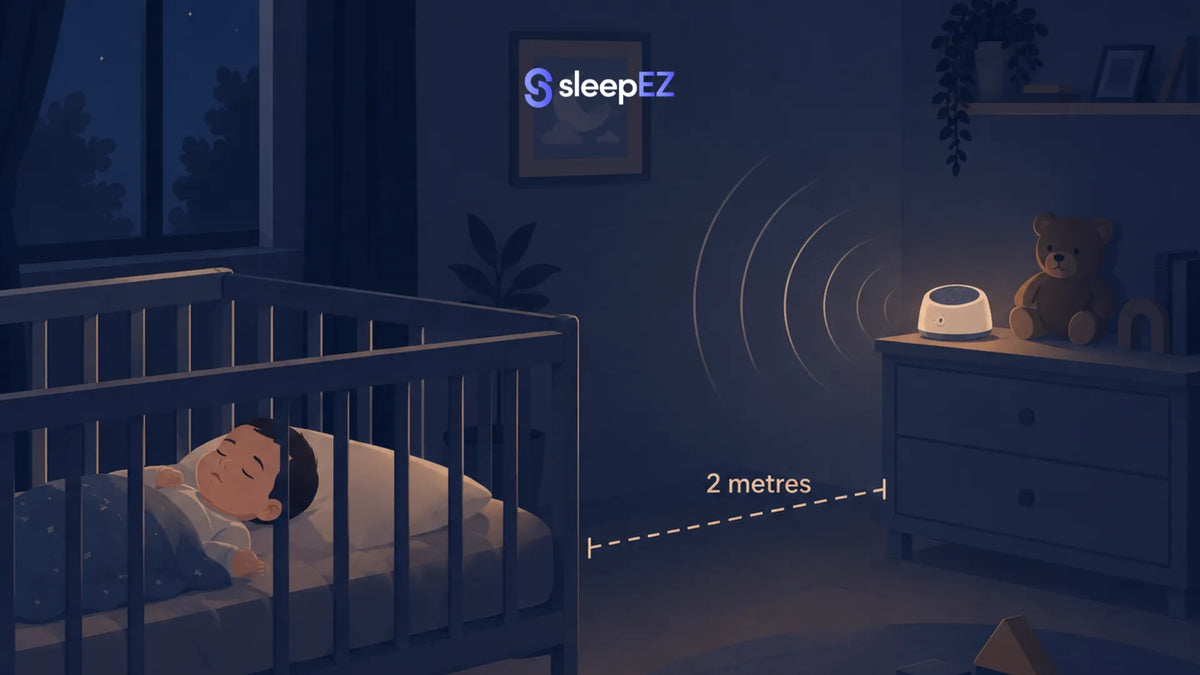
The solution: A sound machine creates an "auditory blanket" for your brain. It provides a neutral focal point that drowns out racing thoughts. White noise, brown noise, or nature sounds all work by giving your threat-detection system something harmless to monitor.
This isn't about masking outside noise. It's about giving your brain a safe anchor. When your mind starts to wander toward stress, the sound pulls it back to something neutral and steady.
Choose sounds without sudden changes or patterns. Ocean waves, rain, or steady fan noise work better than music with melodies or lyrics.
2. Visual Decompression
The problem: Even dim light signals alertness to a stressed brain. Your eyes send "stay awake" messages to your brain when they detect any light. A stressed nervous system treats this as confirmation that it's not safe to sleep yet.
The solution: Total darkness is a non-negotiable signal for melatonin production. A contoured sleep mask blocks all light without putting pressure on your eyes. This physical darkness forces your visual system to rest.
Your brain interprets complete darkness as "the day is over." This signal helps override the stress response that's keeping you awake. The mask also prevents you from opening your eyes to check the clock, which restarts the worry cycle.
Look for masks with deep eye cups that don't touch your eyelids. Flat masks can create pressure that keeps you aware of the mask itself.
3. Regulated Breathing
The problem: Stress causes shallow, rapid chest breathing. This is called hyperventilation, and it keeps your body in fight-or-flight mode. Fast breathing signals danger to your nervous system, which responds by staying alert.
The solution: Nasal breathing is the off switch for stress. Research published in the American Journal of Physiology shows that breathing through your nose lowers blood pressure and increases parasympathetic nervous system activity. That's your rest-and-digest system.
Using mouth tape (safely applied) gently forces you to breathe through your nose. This naturally slows your breath rate and deepens each breath. The slower rhythm tells your body it's safe to relax.
Start with small strips of gentle medical tape placed vertically on closed lips. Never tape your mouth if you have nasal congestion, sleep apnea, or breathing problems. The goal is gentle encouragement, not forced closure.
Many people notice calmer sleep within the first night. Your body shifts from stress breathing to rest breathing without conscious effort.
4. Progressive Muscle Relaxation (PMR)
Stress makes your muscles tense without you realizing it. Your body prepares for action that never comes. This tension keeps sending "stay alert" signals to your brain.
PMR works by deliberately tensing and releasing muscle groups. Start with your toes. Squeeze them tight for five seconds, then release completely. Notice the difference between tension and relaxation.
Move up through your body: calves, thighs, stomach, chest, hands, arms, shoulders, neck, face. Tense each area for five seconds, then let it go. The contrast helps you recognize where you're holding stress.
This technique works because your nervous system can't maintain high alert when your muscles are fully relaxed. The physical release triggers a mental release. Do this lying in bed with lights off. It takes about 10-15 minutes and often leads directly into sleep.
5. The "Worry Dump" (Journaling)
Your brain keeps replaying worries because it thinks you'll forget them. Writing them down gives your mind permission to let go.
Keep a notebook by your bed, but use it two hours before sleep, not in bed. Write down everything on your mind: tasks, worries, ideas, reminders. Don't organize or solve anything. Just dump it all on paper.
For each worry, write one next action if there is one. "Email Sarah about the report" or "Check flight times." If there's nothing you can do (worrying about something you can't control), write "Nothing to do about this now."
This process tells your brain the information is stored safely. You won't forget it. There's no need to keep rehearsing it. Many people find their racing thoughts slow down significantly after a worry dump.
The key is timing. Do this before bed, not in bed. The bed should only be associated with sleep, not problem-solving.
Special Case: Stress and Insomnia During Pregnancy
Pregnancy creates a unique storm of sleep disruption. Hormones shift constantly. Physical discomfort increases. Anxiety about the future intensifies. Normal sleep aids like medication aren't options.
The sensory tools in this article are safe alternatives for pregnant women. Sound machines, sleep masks, and nasal breathing don't involve substances or risks to the baby. They work purely through nervous system regulation.
Progressive muscle relaxation helps with the physical tension that pregnancy often brings. The worry dump technique addresses the mental load that comes with preparing for a new child.
Many pregnant women find that combinations work best. A sleep mask plus sound machine creates a sensory cocoon. Nasal breathing plus PMR addresses both the mental and physical components of stress.
If you're pregnant and experiencing persistent insomnia, talk to your doctor. But these tools can provide immediate relief while you work on a longer-term plan.
Break the Cycle Tonight
You can't always control the stress in your life. You can control how your body responds to it.
The tired-but-wired state isn't permanent. It's a pattern your nervous system learned. You can teach it a different pattern using physical tools that speak its language.
Choose one sensory tool tonight. Sound, darkness, or breath. Use it consistently for three nights. Your nervous system needs repetition to learn that bedtime means safety, not danger.
Most people notice a difference after the first night. Real change happens around night three to five. That's when your body starts to anticipate rest instead of stress.
The cycle can break. It starts with giving your nervous system the right signals at the right time.
This article is for information only. It doesn't replace medical advice. Always talk to a doctor about sleep problems before starting treatment.

Leave a comment
This site is protected by hCaptcha and the hCaptcha Privacy Policy and Terms of Service apply.